
Avoid common bookkeeping errors in UK hospitality


You’re running a busy Saturday lunch service when an envelope arrives from HMRC. Inside is a penalty notice for a VAT error you didn’t even know you’d made. For many small hospitality owners in the UK, this isn’t a hypothetical scenario. It happens regularly, and the costs go beyond the fine itself: stress, wasted time, and a sudden cash flow crisis at the worst possible moment. The good news is that most bookkeeping mistakes are entirely preventable. This guide walks you through the most common errors, explains why they happen, and gives you practical steps to keep your finances clean and compliant.
Table of Contents
Key Takeaways
Point | Details |
Understand VAT categories | Applying the correct VAT rates for dine-in and takeaway sales reduces costly errors. |
Adopt digital records early | Switching to MTD-compliant software now helps avoid penalties and simplifies your accounts. |
Monitor cash and tips | Regularly tracking cash, tips, and labour costs prevents HMRC issues and surprise shortfalls. |
Check your books weekly | Weekly and monthly reviews keep your finances healthy and spot errors before they escalate. |
Seek expert support | Specialist help can streamline compliance and free you to focus on your business. |
Misunderstanding the basics: Criteria for good bookkeeping
Good bookkeeping isn’t about having a degree in accountancy. It’s about three things: accuracy, consistency, and compliance. When all three are in place, everything else becomes much easier to manage.
For small hospitality businesses, the essential records you need to maintain include:
Daily sales totals from your point-of-sale (POS) system
Supplier invoices and receipts for every purchase
Payroll records, including tips and service charges
Bank statements reconciled against your books each month
VAT records, including input and output tax
When these records are incomplete or inconsistent, the consequences stack up fast. Missed VAT obligations and cash flow errors are two of the most common outcomes of poor bookkeeping basics. HMRC can issue fines, request audits, and in serious cases, pursue back payments going back several years.
The warning signs that your books need attention are often subtle at first. Missing receipts, bank reconciliations that are weeks behind, or expense categories that don’t quite make sense are all red flags. If you’re regularly unsure how much cash you actually have, or you dread opening your accounting software, something needs to change.
Understanding hospitality bookkeeping basics is the foundation everything else is built on. Without it, even the most profitable café or restaurant can find itself in serious trouble.
Pro Tip: Set aside 30 minutes every Friday to reconcile the week’s transactions. This one habit alone prevents the majority of bookkeeping errors before they become problems.
VAT mix-ups: Navigating dine-in, takeaway, and rates
Once your basics are in order, VAT mistakes still trip up even experienced owners, especially with complex hospitality rules. The UK’s VAT treatment of food and drink is notoriously complicated, and getting it wrong is one of the most expensive errors you can make.
The core distinction is between dine-in and takeaway sales. Here’s how the rates typically apply:
Sale type | Example | VAT rate |
Dine-in food | Burger served at a table | 20% |
Hot takeaway food | Chips to go | 20% |
Cold takeaway food | Packaged sandwich | 0% |
Alcoholic drinks | Any setting | 20% |
Soft drinks (dine-in) | Cola at a table | 20% |
The table above shows why incorrect VAT handling causes so many issues. A café selling both cold packed lunches and hot meals needs to apply different rates to different items, every single day.
Common VAT errors in hospitality include:
Applying 20% to cold takeaway items that should be zero-rated
Failing to separate alcohol from food sales in your records
Not accounting for partial exemption when you sell a mix of taxable and exempt goods
Relying on your POS to calculate VAT without checking the settings are correct
“The most costly VAT errors are the ones that go unnoticed for months. By the time HMRC catches them, the back payments and penalties can be significant.”
To check for VAT accuracy, reconcile your POS reports against your VAT return every quarter. If the numbers don’t match, investigate before submitting. Getting VAT for small hospitality right from the start is far cheaper than correcting it later.
Overlooking Making Tax Digital (MTD) and digital records
With VAT sorted, there’s a digital transformation underway. Making Tax Digital will soon impact every hospitality owner, and the deadlines are closer than many people realise.
Here’s when MTD requirements apply to small businesses:
Annual income threshold | MTD for Income Tax start date |
Over £50,000 | April 2026 |
Over £30,000 | April 2027 |
Over £20,000 | April 2028 |
The failure to keep digital records under MTD can result in penalties, increased HMRC scrutiny, and the kind of disorganised records that make an audit a nightmare.
Getting started with MTD-compatible software doesn’t need to be complicated. Here’s a simple approach:
Choose compatible software such as Xero or QuickBooks
Connect your POS system to your accounting software where possible
Set up digital storage for receipts using a scanning app
Ensure your VAT records are updated in real time, not at quarter end
Ask your bookkeeper or accountant to confirm your setup meets HMRC requirements
The digital bookkeeping transition is genuinely manageable if you start early. Waiting until the deadline is when things go wrong.
Pro Tip: Automating the upload from your POS to your accounting software removes a significant source of manual error. Many modern POS systems integrate directly with Xero, making this a one-time setup.
If you want a clear breakdown of what’s required, the MTD requirements explained page covers the key obligations without the jargon.
Cash, tips, and labour: The hidden traps
Getting digital is essential, but the traditional areas, cash, tips, and staff wages, still account for the riskiest errors in small hospitality businesses.
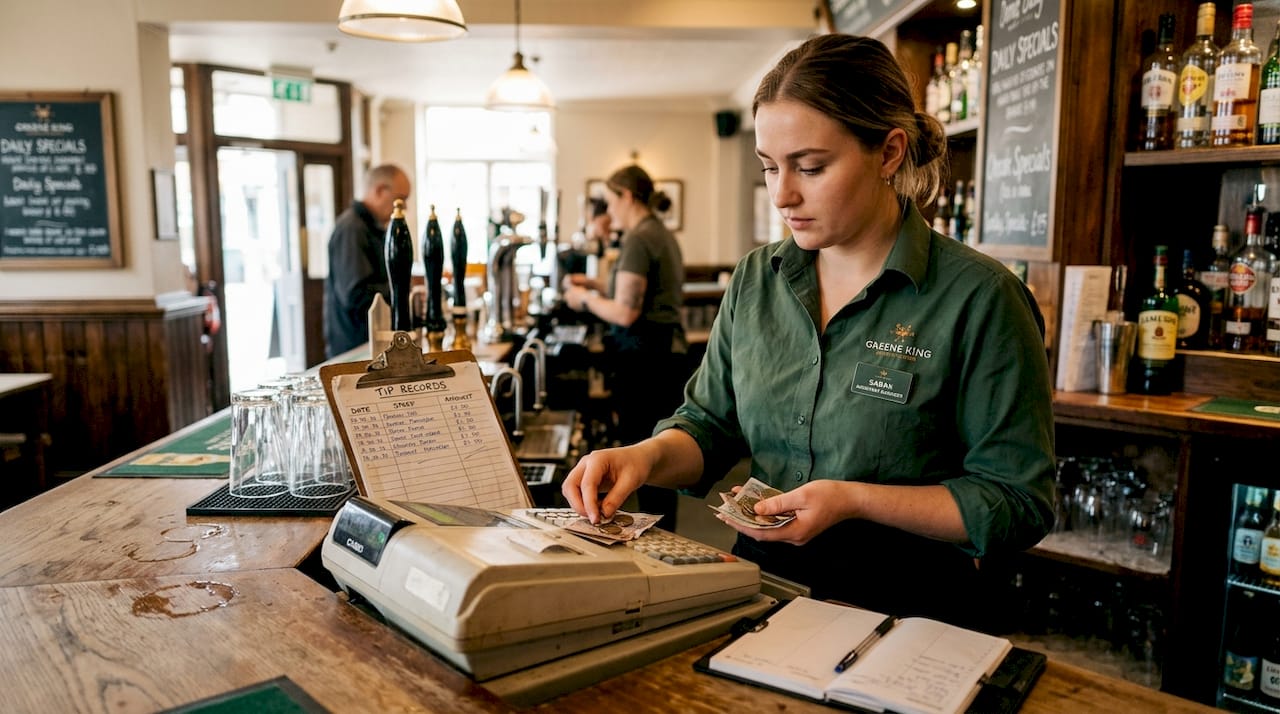
HMRC knows hospitality is a cash-heavy sector. HMRC audits regularly target hospitality businesses for unreported cash sales, tips, and income from online travel agencies (OTAs). Even honest errors in these areas can trigger investigations and back payments.
Here’s where most owners go wrong:
Cash handling: Not recording every cash transaction, even small ones
Tips and service charges: Failing to account for these correctly in payroll and VAT records
OTA income: Treating platform payments as net income rather than gross, missing the VAT element
Bank reconciliation: Not matching cash takings to bank deposits weekly
Labour is the other major risk area. Labour costs often represent 30 to 40% of revenue in hospitality. If you’re not tracking this as a percentage of weekly turnover, you won’t spot when it creeps up until it’s already damaging your margins.
Tracking hospitality payroll errors before they compound is far simpler than correcting months of incorrect records.
Pro Tip: A weekly cash flow review takes less than 20 minutes. Compare your POS totals against your bank deposits and flag any gaps immediately. Doing this monthly instead of weekly means errors have four times longer to grow.
Quick comparison: The top errors and how to fix them
All these problems can feel overwhelming, so here’s a simple comparison to help you focus on what matters most.
Error | Impact | Fix |
Poor record-keeping | Missed VAT, cash flow gaps | Set up a weekly reconciliation routine |
VAT misclassification | HMRC penalties, back payments | Check POS VAT settings quarterly |
Ignoring MTD | Fines, audit risk | Move to compatible software now |
Unreported cash/tips | Investigation, back tax | Record every transaction same day |
Labour cost drift | Margin erosion | Track labour as % of weekly revenue |
The most common errors in small hospitality businesses all share one thing: they’re invisible until they become expensive.
Here’s a practical action list to work through:
Audit your current record-keeping against the essentials list in section one
Check your POS VAT settings against the rate table in section two
Confirm whether your income puts you in scope for MTD in 2026
Review your last three months of cash records for unexplained gaps
Calculate your labour cost as a percentage of last month’s revenue
If you’re unsure where to start, or if you find gaps in more than two of these areas, it’s worth getting hospitality bookkeeping support from someone who specialises in this sector. Generic accountants often miss the nuances that matter in hospitality.
Why smart hospitality owners focus on prevention, not panic
Most hospitality owners only think about their books when something goes wrong. A VAT notice arrives, a bank balance doesn’t add up, or an accountant flags a problem at year end. By that point, the damage is already done.
The owners who avoid these situations aren’t necessarily more financially savvy. They’ve simply built a few small habits that keep things in order throughout the year. One hour a week, split between reconciling transactions and reviewing cash flow, is genuinely enough to stay on top of compliance for a single-site business.
Digital tools lower the barrier significantly. But tools without habits are just unused software. The real difference is consistency. Businesses that thrive while competitors struggle with HMRC issues tend to have simple, repeatable routines rather than complex systems.
If you want expert hospitality bookkeeping to underpin those habits, the investment is far smaller than the cost of a single penalty notice. Prevention is always cheaper than the cure.
Get help streamlining your hospitality bookkeeping
If this article has flagged gaps in your current approach, you’re not alone. Most small hospitality owners are running their books reactively, and the mistakes outlined here are genuinely common.
HospoBase is built specifically for small, single-site UK hospitality businesses doing under £200,000 a year. We handle bookkeeping, VAT returns, payroll, and year-end accounts at a fixed fee of £295 + VAT per month, with no long-term contracts. If you’re ready to stop worrying about compliance and start running your business with confidence, explore affordable hospitality bookkeeping or apply for specialist hospitality accounting today. You can also learn more about HospoBase and what’s included.
Frequently asked questions
What records must I keep as a small hospitality business?
You need to keep records of all sales, receipts, supplier invoices, payroll, VAT records, and digital copies for MTD compliance. HMRC can request these records going back several years.
How do I avoid common VAT errors with food and drink sales?
Check whether each sale is dine-in or takeaway and apply the correct rate; keep clear item categories in your EPOS system to avoid incorrect VAT handling at the point of sale.
What is Making Tax Digital and do I need it for my café?
If your hospitality business income exceeds £50,000, you’ll need compatible digital record-keeping and MTD software from April 2026. Lower thresholds follow in 2027 and 2028.
What is HMRC most likely to audit in small hospitality businesses?
HMRC targets cash handling, tips, and OTA income in hospitality, looking for unreported sales or discrepancies between POS records and bank deposits.
How often should I review my accounts to avoid errors?
Reviewing cash flow weekly and accounts monthly helps catch errors early; weekly reviews prevent small discrepancies from growing into costly HMRC issues.
Recommended
Comments