
Basic bookkeeping for UK hospitality owners: a clear guide

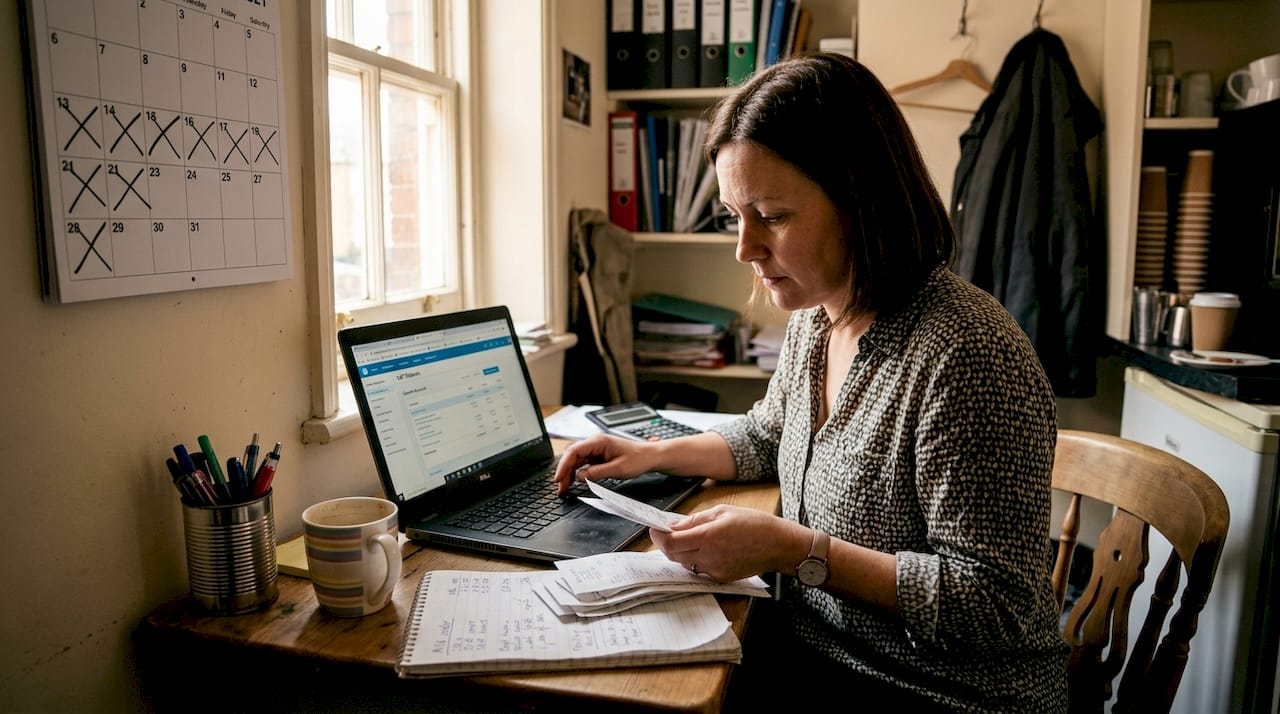
Many café and bar owners assume bookkeeping is simply keeping receipts in a folder and reconciling the bank once a month. That misunderstanding leaves them exposed to HMRC penalties, cash flow surprises, and year-end chaos. Basic bookkeeping is the process of recording, organising, and maintaining every financial transaction your business makes, covering income, expenses, invoices, and bank reconciliations. For hospitality operators under £200,000 annual revenue, getting this right is not optional. It is the foundation that keeps your business compliant, your costs visible, and your stress levels manageable. This guide explains exactly what is involved, which method suits your venue, and what UK rules you must follow.
Table of Contents
Key Takeaways
Point | Details |
Bookkeeping is vital | Accurate records ensure you stay compliant and can run your café or bar smoothly. |
Pick the right system | Double-entry bookkeeping paired with good software reduces costly mistakes for high-volume venues. |
Meet HMRC & MTD rules | Retain records for 5-6 years and use digital tools if VAT registered or over £50k income. |
Specialist support helps | Hospitality-focused bookkeepers make compliance and daily tasks easier so you can focus on customers. |
What does basic bookkeeping mean for hospitality businesses?
Now that we understand the importance of clarity, let’s define what basic bookkeeping looks like day-to-day for a hospitality business. At its core, bookkeeping for restaurants and cafés means capturing every penny that moves through your business, whether that is a card payment at the till, a cash tip from a table, or an invoice from your coffee supplier.
Hospitality businesses face a specific challenge that most other small businesses do not: volume. A busy café might process hundreds of individual transactions on a Saturday alone. Cash payments, split bills, staff meals, and supplier credits all need to be recorded accurately. Miss one category consistently and your profit figures become meaningless.
Hospitality bookkeeping basics typically cover the following areas:
Sales recording: Daily totals from your point-of-sale (POS) system, broken down by payment type.
Expense tracking: Every purchase, from ingredients to cleaning supplies, logged against the correct category.
Supplier invoices: Received, matched to deliveries, and filed before payment goes out.
Payroll records: Hours worked, wages paid, and National Insurance contributions recorded for every team member.
Petty cash: A running log of small cash purchases so nothing disappears without a trace.
Bank reconciliation: Matching your bank statement to your records so errors surface quickly.
Tips and gratuities: Properly recorded to meet HMRC guidance on how tips are treated for tax purposes.
“Basic bookkeeping is the process of recording, organising, and maintaining all financial transactions of a business, including income, expenses, invoices, and bank reconciliations.” — Business Accounting Basics
The hospitality angle matters here. A generic bookkeeping approach built for a freelancer or a retail shop will not account for the nuances of your trade: seasonal swings in revenue, the complexity of VAT on food versus alcohol, or the reality of split shifts affecting payroll. That is why specialist hospitality accounting is worth considering from the outset rather than retrofitting a generic system later.
Pro Tip: Connect your POS system directly to your bookkeeping software from day one. It eliminates manual data entry for sales and dramatically reduces the chance of recording errors during busy service periods.
Core bookkeeping tasks: what you must do every week and month
Having outlined what basic bookkeeping involves, here is a step-by-step view of the key tasks you will need to tackle regularly. The core bookkeeping tasks for a UK hospitality business include recording sales and purchases daily, managing accounts receivable and payable, completing bank reconciliations weekly or monthly, maintaining VAT records if registered, and running payroll for staff.
Breaking this down into a practical rhythm makes it far less overwhelming:
Daily: Record all sales from your POS, log any cash expenses, and update petty cash.
Weekly: Reconcile your till against your bank, chase any outstanding supplier credits, and file new invoices.
Monthly: Prepare your VAT summary, run payroll, reconcile all accounts, and review your profit and loss position.
Quarterly: Submit your VAT return to HMRC and review your year-to-date figures against budget.
Here is a realistic view of the time involved for a small single-site venue:
Task | Frequency | Estimated time |
Sales recording | Daily | 10 to 15 minutes |
Invoice filing | Daily or as received | 5 to 10 minutes |
Till and bank reconciliation | Weekly | 20 to 30 minutes |
Payroll processing | Monthly | 30 to 60 minutes |
VAT summary preparation | Monthly | 20 to 40 minutes |
Full accounts reconciliation | Monthly | 45 to 90 minutes |
Those hours add up quickly across a month. For an owner already working 60-hour weeks on the floor, that is a real burden. Understanding your bookkeeping plans options early helps you decide what to handle yourself and what to hand off.

It is also worth knowing the difference between bookkeeping and accounting. Bookkeeping vs accounting is a common point of confusion: bookkeeping is the ongoing recording of transactions, while accounting involves interpreting those records for tax filings and strategic decisions. You need both, but bookkeeping comes first.
Pro Tip: Cloud-based software such as Xero can automate bank feeds and categorise transactions, cutting your weekly reconciliation time by more than half and removing the risk of manual entry mistakes.
Single-entry vs double-entry: which method fits your business?
With tasks in mind, it is vital to pick the bookkeeping method that truly suits your hospitality operation. There are two core methodologies: single-entry, which records one line per transaction, and double-entry, which records every transaction as both a debit and a credit.
Here is how they compare:
Feature | Single-entry | Double-entry |
Complexity | Low | Moderate |
Error detection | Weak | Strong |
Suitable for | Very small cash-only businesses | Most businesses including hospitality |
HMRC compliance | Limited | Fully compliant |
Supports VAT returns | Difficult | Yes |
Scales with growth | No | Yes |
Single-entry works like a personal bank statement. You record money in and money out. It is simple, but it offers no built-in error checking. If you mispost a figure, you may not notice until something goes wrong at year-end.
Double-entry records every transaction twice: once as a debit and once as a credit. For example, when you pay a supplier invoice, your bank account decreases (credit) and your expenses increase (debit). This self-balancing system catches errors automatically and produces the financial statements your accountant needs.
For hospitality bookkeeping UK, double-entry is becoming the standard even for small venues. Here is why single-entry creates problems for cafés and bars:
Tips and gratuities are easily misclassified without a proper debit/credit structure.
Mixed VAT rates on food and drink are harder to track accurately.
Cash handling errors go undetected far longer.
Payroll complexity is difficult to manage without a double-entry framework.
Pro Tip: Even if you are not yet VAT registered, set up double-entry bookkeeping now. When you cross the VAT threshold or need a business loan, your records will already be in the format lenders and HMRC expect.
HMRC record-keeping requirements and Making Tax Digital (MTD)
Once you have the right system, it is crucial to meet HMRC’s specific record-keeping demands and digital rules. The legal requirements are straightforward but non-negotiable.
HMRC requires you to keep records for 5 to 6 years, depending on whether you are self-employed or operating as a limited company. For a café or bar, this means retaining:
All sales records and till receipts.
Purchase invoices and supplier statements.
Bank statements and reconciliations.
Payroll records including payslips and PAYE submissions.
VAT records if you are registered.
Any records of cash transactions.
The digital shift is already under way. Making Tax Digital (MTD) is HMRC’s programme to move all tax record-keeping and submissions online. MTD for VAT has applied to all VAT-registered businesses since 2022, meaning you must keep digital VAT records and submit returns through compatible software.
MTD for Income Tax Self-Assessment (ITSA) will apply from April 2026 to anyone with self-employment or property income over £50,000, requiring quarterly digital updates to HMRC via approved software.
For most small hospitality operators, the VAT threshold of £90,000 means MTD for VAT is already relevant. If your turnover is approaching that figure, or if you are self-employed with income above £50,000, you need to be using digital records now, not scrambling to catch up later. Our MTD guidance walks through what this means in practice for venue owners.
Digital record-keeping platforms also make compliance far easier. Rather than searching through paper folders at year-end, your records are timestamped, categorised, and ready to export. That alone saves significant stress during VAT return season.
What most hospitality owners get wrong about bookkeeping
Even with all these rules clearly laid out, there are crucial aspects many owners still miss. The most common mistake is not choosing the wrong method. It is waiting too long to upgrade the method they started with.
Many operators begin with a spreadsheet or a simple cashbook when they first open. That works fine at low volume. But as the business grows, transaction complexity outpaces what a basic system can handle. By the time errors become visible, months of records need correcting.
The double-entry standard for UK SMEs exists for good reason. Single-entry risks missing statements, misclassifying income, and producing figures that do not hold up under scrutiny. For hospitality, where cash handling and mixed VAT rates are routine, those risks are amplified.
Our view at HospoBase is simple: upgrade your system before you feel you need to. Pairing double-entry software with your POS and a cloud platform protects you against both compliance failures and the operational headaches that come from inaccurate numbers. You can find expert bookkeeping advice tailored to venues like yours, but the core principle applies universally. Accurate records are not a luxury. They are what lets you make confident decisions about staffing, menu pricing, and growth.
Get support with your hospitality bookkeeping
If you would like dedicated support for your bookkeeping and compliance needs, the right solution may be closer than you think.
At HospoBase, we handle affordable hospitality bookkeeping for small, single-site venues across the UK, covering everything from daily transaction recording to VAT returns and MTD digital submissions. Our fixed fee of £295 plus VAT per month means no surprises, no long-term contracts, and no unnecessary complexity. Whether you run a café, a bar, or a neighbourhood restaurant, we keep your numbers accurate and your compliance on track. Take a look at our see pricing plans or go ahead and accounting support application to get started. Running your venue is hard enough without worrying about the books.
Frequently asked questions
What records must a UK hospitality business keep for HMRC?
You must keep all sales, purchases, receipts, staff payroll details, and VAT records (if registered) for at least 5 to 6 years as required by HMRC.
Am I required to use digital bookkeeping in 2026?
If you are VAT registered or have self-employment income over £50,000, you must use digital bookkeeping software under Making Tax Digital rules from April 2026.
Is single-entry bookkeeping enough for a small coffee shop?
Single-entry may work for a very small, cash-only café under £200,000 revenue, but double-entry is safer and far less likely to produce costly errors as your business grows.
How can I make weekly bookkeeping in my bar quicker?
Linking your POS to cloud bookkeeping software automates sales recording and bank feeds, cutting manual entry time significantly and reducing the errors that come with high-volume transactions.
Recommended
Comments