
Monthly accounting routine for restaurants: UK guide

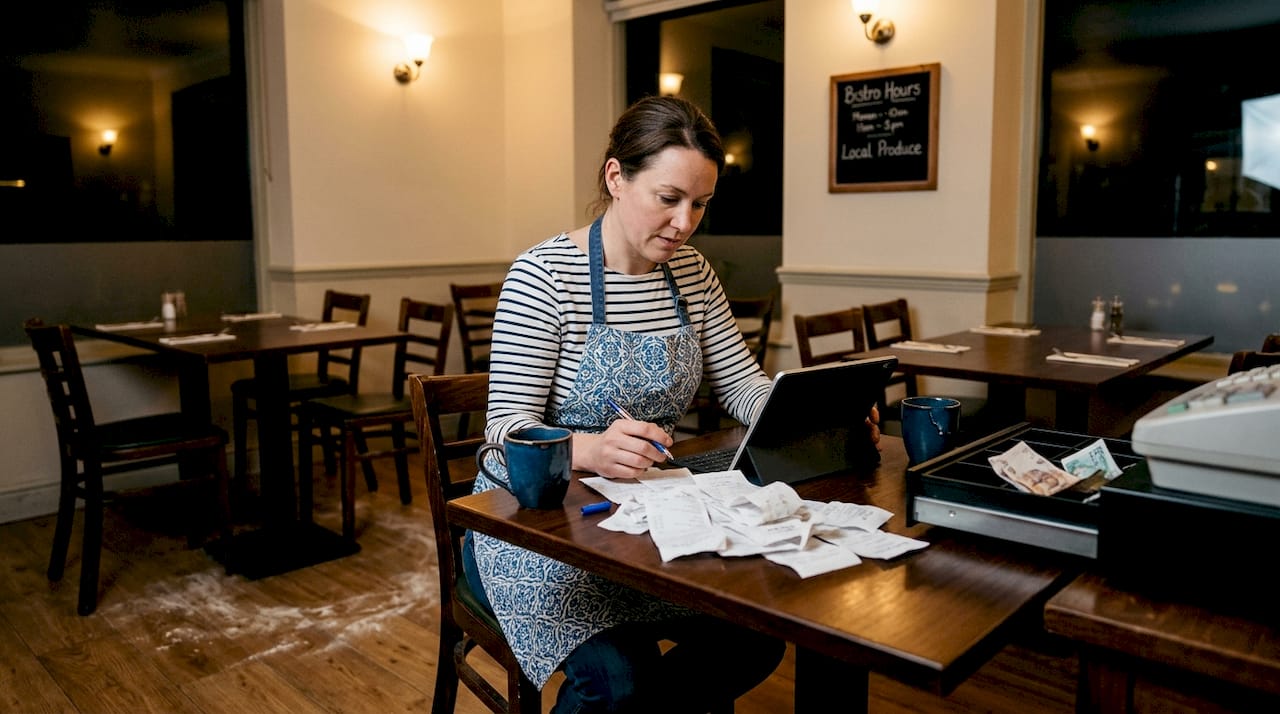
Most small hospitality businesses don’t have a monthly routine for their accounts — they have a monthly panic.
Receipts get left, VAT gets guessed, and everything gets pulled together at the last minute.
The problem isn’t knowing what to do — it’s having a simple, repeatable process that actually gets done.
This guide breaks down a straightforward monthly accounting routine for small restaurants, cafés, and bars in the UK.
Table of Contents
Key Takeaways
Point | Details |
Keep it regular | Doing monthly accounting keeps your restaurant finances under control and avoids last-minute tax stress. |
Use the right tools | Simple software and well-organised records save both time and money for small hospitality businesses. |
Avoid common errors | Checking your records every month prevents expensive HMRC penalties and compliance headaches. |
Simplicity wins | A clear, repeatable routine is the best friend of busy UK restaurant owners. |
Why monthly accounting matters for small restaurants
It’s tempting to think that accounting is something you deal with once a year when your tax return is due. For small hospitality businesses, that approach is genuinely risky. Cash flow in restaurants moves fast. Money comes in through the till every day, but rent, wages, supplier invoices, and VAT all land at different times. Without a regular routine, it’s very easy to lose track of where you actually stand.
The stakes are higher than most owners realise. Small restaurant failure risks are closely tied to poor financial management, with cash flow problems being one of the most common reasons UK hospitality businesses close. It’s not always about poor trading. Sometimes it’s simply that the owner didn’t spot the problem early enough because the numbers weren’t being reviewed regularly.
HMRC also has clear expectations. You are legally required to keep accurate financial records, and failing to do so can result in penalties and investigations. Good hospitality bookkeeping tips always start with the same foundation: do a little, consistently, rather than a lot, chaotically.
Here are the most common pain points that monthly accounting helps you avoid:
Missing receipts that cause problems at year-end or during a VAT inspection
Unpaid supplier invoices that damage supplier relationships and create unexpected cash shortfalls
VAT miscalculations that lead to underpayment or overpayment
Payroll errors that upset staff and create legal exposure
No visibility on profit until it’s too late to make adjustments
A monthly routine turns these reactive problems into proactive habits. Two to three hours a month is genuinely all it takes once you have a system in place.
Now that you see why monthly routines are crucial, let’s clarify exactly what you’ll need before getting started.
What you need to start: Tools and documents
Before you can build a monthly routine, you need the right materials in front of you. The good news is that you don’t need anything complicated. Most small restaurant owners can manage perfectly well with a small set of tools and a clear list of documents to gather each month.
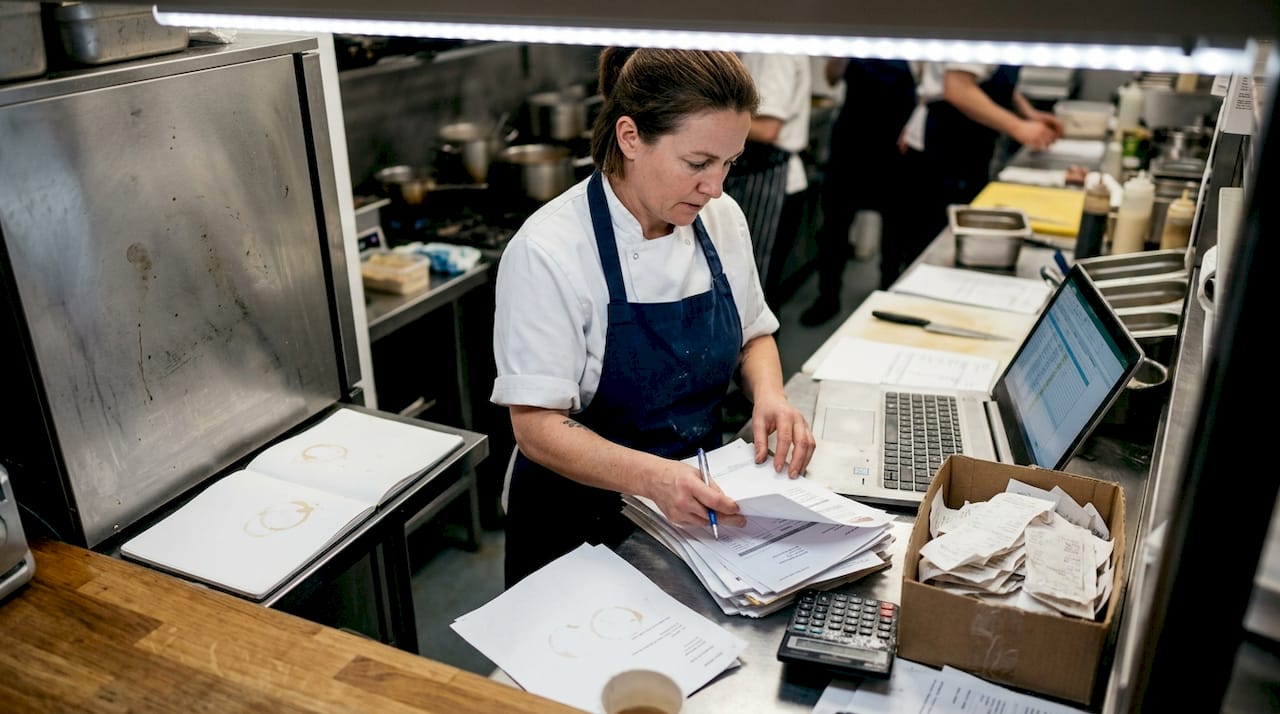
Cloud accounting adoption has grown significantly among small UK businesses, and for good reason. These tools are now affordable, easy to use, and far more reliable than a spreadsheet you update once a quarter. Platforms like Xero connect directly to your bank account and automate much of the data entry, saving you real time every month.
Here’s a quick overview of what you’ll need:
Tool or document | Purpose |
Cloud accounting software (e.g. Xero) | Automates bank feeds, invoicing, and VAT calculations |
Bank statements | Used to reconcile transactions each month |
Sales records or till reports | Confirms daily and weekly takings |
Purchase invoices and receipts | Records what you’ve spent with suppliers |
Payroll records | Tracks wages, PAYE, and National Insurance |
VAT records | Supports accurate quarterly VAT returns |
Spreadsheet (backup) | Useful for quick manual checks or summaries |
Beyond the tools, make sure you have a reliable way to store documents. Paper receipts get lost. A simple habit of photographing receipts on your phone and uploading them to your accounting software or a folder in the cloud takes seconds and saves enormous hassle later.
If you’re unsure which setup works best for your size of business, exploring specialist accounting services built for hospitality can help you avoid costly mistakes from the start.
Pro Tip: Use a dedicated business bank account if you haven’t already. Mixing personal and business transactions is one of the most common causes of accounting errors for small restaurant owners, and it makes reconciliation far harder than it needs to be.
With your paperwork and tools ready, it’s time to see what a practical monthly routine actually looks like.
The essential monthly accounting steps for UK restaurants
This is the core of your routine. Done consistently, these six steps will keep your accounts accurate, your VAT sorted, and your cash flow visible throughout the year. HMRC’s record keeping rules are clear: breaking your processes into manageable monthly tasks improves compliance and reduces the risk of costly errors.
Reconcile your bank statements. Match every transaction in your accounting software against your actual bank statement. Flag anything that doesn’t match and investigate it before moving on.
Record all takings and sales invoices. Enter your daily or weekly sales figures, whether from your till system, card reader reports, or delivery platform payouts. Every source of income needs to be captured.
Check and file purchase invoices. Go through all supplier invoices received during the month. Make sure each one is recorded, matched to a payment, and filed correctly.
Calculate and set aside VAT. If you’re VAT-registered, work out your VAT liability for the month and move that amount into a separate account. This prevents the quarterly bill from coming as a shock.
Review your payroll. Confirm that wages, PAYE, and National Insurance contributions are correctly recorded and that any changes to hours or rates have been updated.
Update your financial dashboard. Review your profit and loss summary, check your cash position, and note anything that needs attention next month.
Pro Tip: Block two hours at the end of each month, treat it like a fixed appointment, and do all six steps in one sitting. Batching the tasks makes them faster and reduces the chance of something being forgotten.
Here’s a quick comparison to help you decide how to handle these steps:
Task | DIY | Using a bookkeeper |
Time required | 2 to 3 hours per month | Near zero for you |
Cost | Low (software only) | Fixed monthly fee |
Error risk | Moderate without training | Low with a specialist |
HMRC compliance | Your responsibility | Managed for you |
Visibility | Depends on your skill | Regular, reliable reports |
Following the main steps gives you control, but what are the frequent mistakes you should avoid and how do you recover if something’s missed?
How to overcome common accounting mistakes and stay compliant
Even with a good routine, mistakes happen. The key is catching them quickly before they become serious problems. Some errors are minor. Others, left unchecked, can trigger an HMRC investigation or result in a penalty that hurts your cash flow.
“HMRC late filing penalties can include fines, interest charges, and in serious cases, formal investigations. For small businesses already operating on tight margins, these costs can be significant.”
The most common mistakes small restaurant owners make include:
Unposted expenses: Supplier invoices or receipts that were never entered into the system, causing your costs to look lower than they really are
Unreconciled bank items: Transactions sitting in your accounts that haven’t been matched, making your balance unreliable
Forgetting VAT accrual: Not setting aside VAT each month means the quarterly bill can catch you off guard
Mixing up personal and business spending: A classic problem that creates hours of untangling at year-end
Ignoring payroll discrepancies: Small errors in PAYE calculations can accumulate into a meaningful liability
Warning signs that something has gone wrong include balance sheet figures that don’t match your expectations, unexplained cash shortages, or receiving unexpected letters from HMRC. If you spot any of these, don’t ignore them.
The fix is usually straightforward: go back to the last point where your records were accurate, work forward, and correct each entry. If you’re unsure, this is exactly the moment to reach out for help. Good bookkeeping for restaurants doesn’t need to be complicated, but it does need to be consistent.
Avoiding mistakes makes monthly accounting smoother, but how do you know it’s working for your business?
The overlooked truth: Simplicity beats complexity every time
Here’s something that years of working with small hospitality businesses has made very clear: the owners who struggle most with their accounts are rarely the ones who know the least. They’re the ones who’ve tried to do too much.
There’s a tendency to think that better accounting means more software, more dashboards, more reports. In reality, for a single-site restaurant doing under £200,000 a year, the most powerful thing you can do is master a small number of tasks and do them without fail every month. Complexity is the enemy of consistency.
The affordable bookkeeping options that work best for small operators are the ones that remove friction, not add it. A simple routine you actually follow is worth ten sophisticated systems you abandon after a fortnight. Outsourcing isn’t always the answer either. Sometimes, a clear process and thirty minutes a week is all it takes to stay on top of things. Start with the essentials, do them well, and build from there.
Streamline your restaurant accounts with expert help
If reading through this guide has made you realise your current setup needs work, you’re not alone. Most small restaurant and café owners come to us having outgrown spreadsheets or feeling overwhelmed by software they don’t fully understand.
At HospoBase, we handle affordable hospitality bookkeeping for single-site UK restaurants and cafés, covering everything from VAT returns and payroll to year-end accounts, all for a fixed fee of £295 + VAT per month. No long-term contracts, no surprises. If you’re ready to hand the numbers over to someone who understands hospitality, you can apply for accounting help and find out if we’re the right fit for your business.
Frequently asked questions
How much time should I spend on monthly accounting?
Most small restaurant owners can complete their monthly accounting tasks in 2 to 3 hours once they have a consistent routine and the right tools in place.
Which records am I legally required to keep for my restaurant?
You must keep all sales, expense, payroll, and VAT records for at least six years, as required by HMRC record keeping rules.
What happens if I miss or file records late with HMRC?
Late or inaccurate submissions can result in fines, interest charges, or a formal tax investigation, as outlined in the HMRC late filing penalties guidance.
Can software really make my accounting faster?
Cloud accounting software automates bank feeds, VAT calculations, and reporting, helping small restaurant owners cut admin time significantly each month.
Recommended
Comments